Reionization: How the First Stars Transformed the Universe
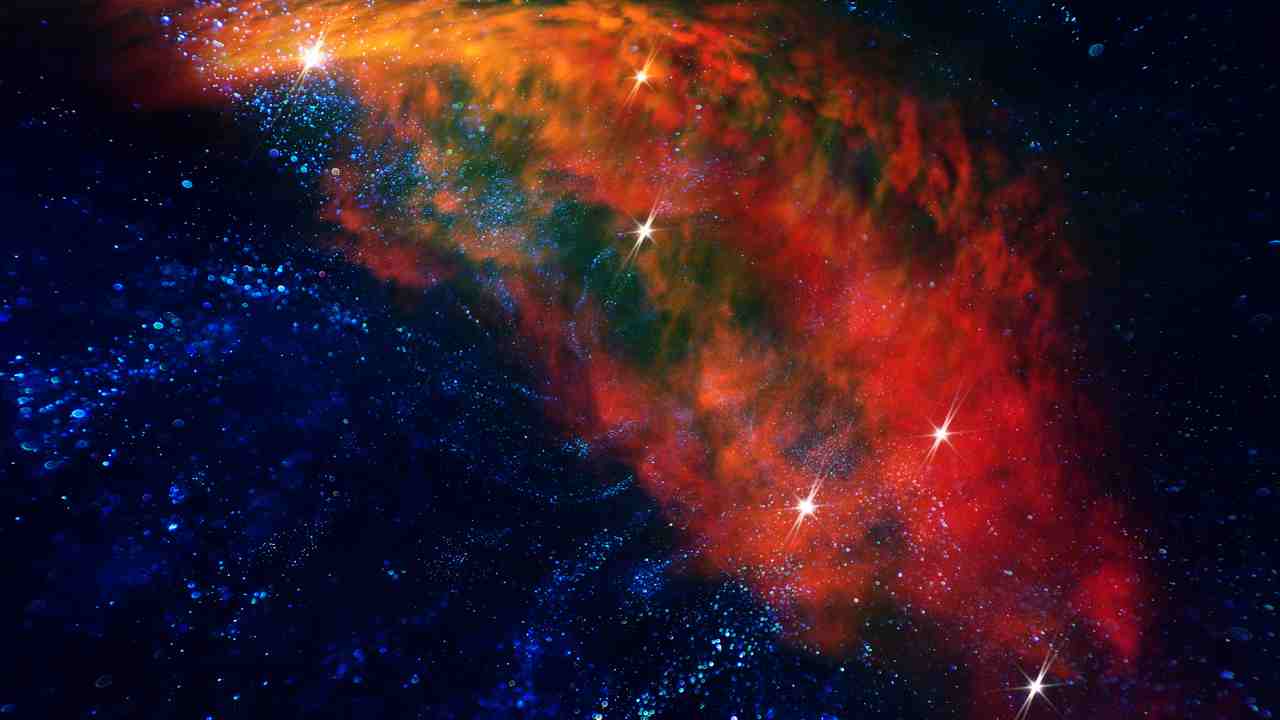
Long before galaxies took their modern shapes and long before the Milky Way existed, the universe went through one of its most dramatic transformations. It began in darkness, filled with neutral hydrogen stretching across billions of light‑years. Then the first stars appeared—brilliant, massive, short‑lived giants.
Their light didn’t just illuminate the cosmos. It changed the state of matter everywhere. This sweeping change is known as cosmic reionization, a period when the universe shifted from being filled with neutral atoms to being filled with ionized gas. It was a turning point that made the universe transparent again and allowed structure to flourish.Unlike many cosmic events, reionization didn’t happen in a single moment. It unfolded like a slow, expanding dawn.
The Universe Before Reionization
After the Big Bang and the formation of neutral atoms, the universe entered a quiet stage often called the Cosmic Dark Ages. During this time:
- Hydrogen atoms were stable and neutral
- There were no stars or galaxies yet
- Light couldn't travel far because dense gas absorbed it
- Space was cold and dark, with only the faint glow of the cosmic microwave backgroundThe universe had structure in the form of slight density variations, but it had no sources of new light.
The First Stars Break the Darkness
The silence ended with the birth of the first stars. These stars:
- Formed in small dark matter halos
- Were incredibly hot
- Emitted intense ultraviolet radiation
- Lived only a few million yearsAs their light spread outward, it interacted with the neutral hydrogen surrounding them.This radiation had enough energy to break hydrogen atoms apart, separating electrons from protons. That’s what reionization means: the gas that had become neutral after the Big Bang became ionized again.
Bubbles of Ionized Gas Expand
The process didn’t happen evenly. Each star—or small cluster of early stars—created its own bubble of ionized gas. The sizes of these bubbles grew with time.Imagine the universe as an ocean of neutral gas, with bright islands forming expanding circles of ionized water. Eventually:
- Bubble edges grew
- Neighboring bubbles overlapped
- Ionized regions mergedWhat started as isolated pockets became a connected network.This patchwork structure is one of the signatures scientists search for when studying early cosmic history.
More Light, More Changes
The first stars weren’t alone for long. Their deaths created black holes and supernova explosions, which triggered:
- Formation of second‑generation stars
- Early mini-galaxies
- Accretion disks that produced intense radiationAs the number of stars and early galaxies increased, so did the amount of ultraviolet light flooding the universe.That radiation accelerated ionization, making the bubbles expand faster and farther.
When the Universe Became Fully Ionized
Reionization took hundreds of millions of years and wasn’t a simple before‑and‑after switch. But by roughly 1 billion years after the Big Bang, most of the neutral hydrogen had been ionized.Once this transition finished:
- Light could travel long distances
- The fog of early gas lifted
- Galaxies became visible across cosmic distances
- Large-scale structures could be observedThe universe transformed from opaque to transparent—permanently.
What Reionization Meant for Galaxy Formation
Ionization didn’t just change the universe’s visibility. It changed the way galaxies evolved.
Smaller halos struggled to grow
Ionized gas is hotter and harder to pull in with gravity, meaning some tiny halos lost their supply of star‑forming material.
Larger structures formed stars more efficiently
Bigger halos could still collect gas and grow, becoming the first true galaxies.
Early black holes gained fuel
Ionized regions helped channel gas into the centers of galaxies, feeding early black holes.Reionization created winners and losers—shaping which early structures grew and which faded away.
How We Detect Reionization Today
Even though reionization happened more than 12 billion years ago, its fingerprints remain:
Cosmic microwave background
Subtle patterns in the polarization of the CMB reveal when reionization completed.
Distant galaxies
Galaxies from the reionization era appear faint and redshifted, but their light carries clues about the surrounding gas.
Hydrogen absorption
Neutral hydrogen absorbs certain wavelengths of light. By studying how much distant light is absorbed, scientists can measure how much neutral gas remained at different times.
Radio observations
Future telescopes are expected to map reionization directly by tracking the faint radio glow of hydrogen across time.
A Dawn That Never Ended
Cosmic reionization was the moment the universe stepped out of darkness and began forming the structures we see today. It didn't erase the early universe—it transformed it.When the first stars lit up, they didn’t just create light.They reshaped matter, rewrote chemistry, and changed the destiny of every galaxy that would ever exist.Reionization marks the true beginning of the visible universe—the moment when light reclaimed the cosmos and never gave it back.
More from Big Bang & the Expanding Universe
The First Galaxies: How Did They Form After the Big Bang?
Billions of galaxies fill the modern universe, from elegant spirals to giant ellipticals stretching across hundreds of thousands of light‑years. But the very first galaxies were nothing like these enormous systems. They were tiny, turbulent, fast‑changing structures that emerged from a universe still settling after the Big Bang.
What Triggered the First Stars to Ignite in the Early Universe?
Before the first stars formed, the universe was a dark, silent expanse. There were no galaxies, no planets, and no light—only vast clouds of hydrogen and helium drifting through space. This period, known as the Cosmic Dark Ages, lasted for nearly 100 million years after the Big Bang.
How the Early Universe Transitioned from Plasma to Atoms
In the earliest moments after the Big Bang, the universe was nothing like the space we see today. There were no atoms, no stars, and no galaxies—just an extremely hot, dense soup of particles known as primordial plasma.
Explore More Topics
Gamma-Ray Bursts: The Universe’s Most Violent Explosions
Gamma-ray bursts (GRBs) are brief, powerful flashes of high-energy radiation that outshine entire galaxies for a few seconds. They occur randomly across the sky, often billions of light-years away, yet the energy they release is so intense that Earth-based detectors can pick them up instantly. These events push astrophysics to its limits and provide a rare glimpse into the universe’s most extreme processes.
What Happens Inside a Black Hole? Exploring the Unknown Interior
Black holes are among the most mysterious objects in the universe. While scientists understand how black holes form and how they interact with their surroundings, what happens inside a black hole remains one of the greatest unsolved mysteries in physics. Crossing the event horizon—the point of no return—takes you into a realm where spacetime is warped beyond recognition and where our current theories break down.
The Darkest Objects in the Universe: How We Detect Invisible Black Holes
Black holes are famous for being invisible. They emit no light, no radiation, and no signals that can be directly detected with traditional telescopes. Yet scientists have discovered dozens of them and mapped their behavior across the cosmos. How is this possible?