The First Galaxies: How Did They Form After the Big Bang?

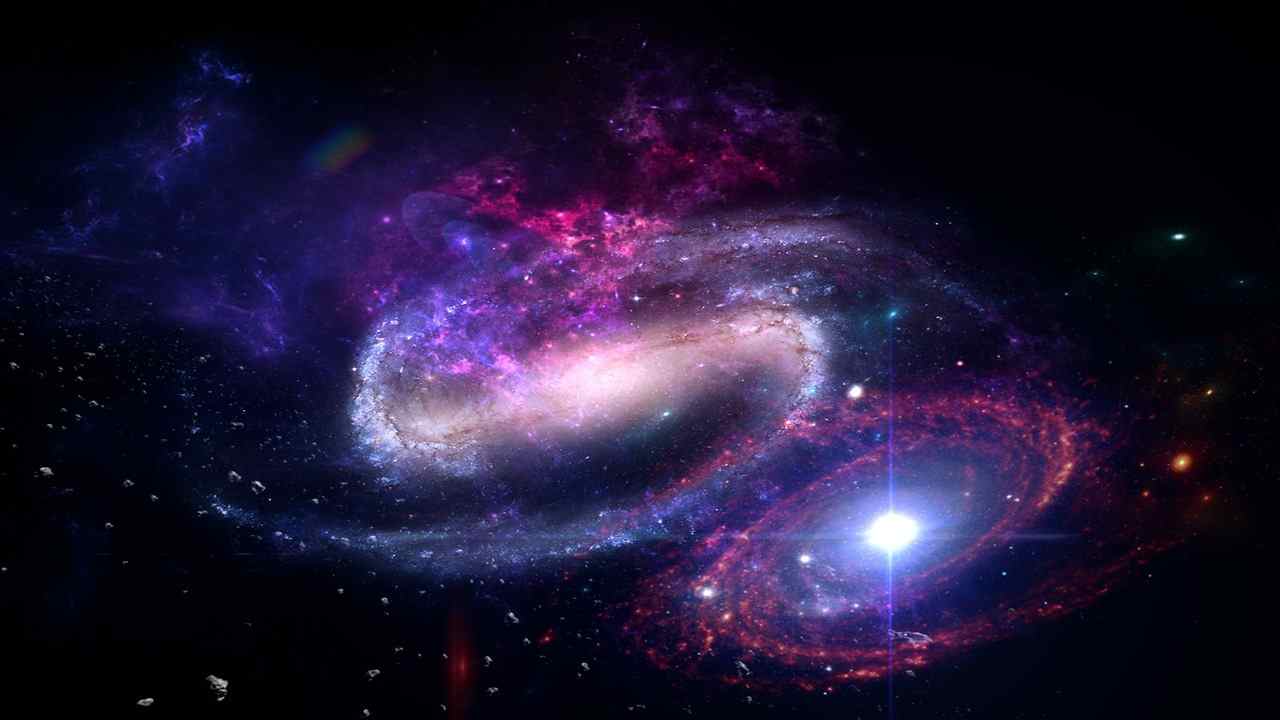
Billions of galaxies fill the modern universe, from elegant spirals to giant ellipticals stretching across hundreds of thousands of light‑years. But the very first galaxies were nothing like these enormous systems. They were tiny, turbulent, fast‑changing structures that emerged from a universe still settling after the Big Bang.Understanding how the first galaxies formed is like uncovering the earliest chapters of a long cosmic story—one that eventually leads to the Milky Way, the Sun, and the existence of life.
After the First Stars: A Universe Ready to Build Bigger Structures
Once the first generation of stars ignited, the universe changed dramatically. Their intense ultraviolet radiation cleared out neutral gas, their supernova explosions injected energy and heavy elements, and their light began shaping the surrounding matter.But individual stars were only the beginning. The next major step was assembling them into galaxies.The earliest galaxies formed in an environment that was:
- Still mostly neutral hydrogen
- Filled with dark matter halos
- Rapidly expanding
- Highly clumpy on small scales
- Full of short‑lived massive starsThese conditions determined how galaxies emerged and grew.
Dark Matter Halos: The Foundations of the First Galaxies
Dark matter, though invisible, built the cosmic framework. As the universe expanded and cooled, dark matter collected into gravitational “wells” called halos.These halos:
- Pulled in gas from surrounding regions
- Provided the gravitational stability needed for structures to grow
- Prevented young stars from drifting apartThe first halos were tiny—roughly a million times less massive than the Milky Way’s halo today. Yet these small wells were enough to gather gas and ignite early star formation.Without dark matter, galaxies as we know them could never have formed.
Gas Flows In and Star Formation Follows
Once inside a halo, gas began cooling and sinking to the center.But cooling wasn’t efficient in the early universe—there were no heavy elements, only hydrogen and helium. These elements cannot radiate heat away easily.Still, molecular hydrogen (H₂) allowed the gas to cool just enough.
This led to:
- Formation of dense clumps
- Collapse under gravity
- Ignition of new stars
- Creation of small stellar clustersThese clusters were the seeds of the first galaxies.
Early Galaxies Were Small, Chaotic, and Fast‑Changing
The first galaxies didn’t look anything like modern spirals.They were:
- Tiny (often just a few thousand light‑years wide)
- Irregular in shape
- Packed with massive stars
- Constantly disrupted by supernova explosions
- Rich in gas and dust created by early starsTheir appearance was more like bright knots or glowing patches rather than organized structures.Because star formation was extremely intense, early galaxies often flickered between active and quiet phases.
Growth Through Mergers: The Universe’s Natural Construction Method
The early universe was crowded. Tiny galaxies weren’t isolated—they constantly interacted and collided.
Galaxy growth during this time was driven by:
- Mergers between small proto‑galaxies
- Accretion of surrounding gas
- Inflows along cosmic filamentsEach merger added new stars and gas, building larger structures over hundreds of millions of years.These collisions weren’t destructive like stellar crashes; galaxies are mostly empty space, so their stars simply mixed together while gas clouds compressed and triggered starbursts.
Heavy Elements Appear and Change Everything
When the first massive stars exploded, they produced the first heavy elements—carbon, oxygen, silicon, iron. This new material dramatically changed the physics of galaxy formation.
Metals (astronomical term for elements heavier than helium) allowed:
- More efficient cooling
- Formation of lower‑mass stars
- Creation of dust grains
- Complex chemistry that would later enable planetsAs metals enriched the gas, galaxies could form stars more steadily and efficiently.This marked the transition from primitive Population III stars to more familiar stellar populations.
The First Disc Galaxies Begin to Take Shape
Over time, continued gas inflow and angular momentum gradually gave structure to young galaxies.Some began forming:
- Flattened rotating discs
- Central bulges
- Organized star‑forming regionsThese were not yet the majestic spirals we see today, but they represented an important step toward order and stability.
The Role of Supermassive Black Holes
Surprisingly, evidence suggests that the first galaxies already hosted growing black holes at their centers. These objects:
- Accreted gas rapidly
- Emitted powerful radiation
- Influenced star formation around themSome early galaxies became quasars, among the brightest objects in the universe.The existence of billion‑solar‑mass black holes so early remains one of the great mysteries of modern cosmology.
What the James Webb Space Telescope Has Revealed
Recent observations from JWST have dramatically changed our understanding of early galaxies.JWST has detected galaxies that:
- Existed just 300–400 million years after the Big Bang
- Are surprisingly bright
- Formed stars faster than expected
- Grew more massive than predicted by older models
- Show hints of early ordered structureThese discoveries suggest galaxy formation might have begun earlier and progressed faster than scientists previously thought.
The Gradual Emergence of the Modern Universe
Over hundreds of millions of years, these small, chaotic galaxies merged and evolved into:
- Larger galaxies
- Spiral structures
- Massive ellipticals
- Complex systems with billions of starsThe early faint glimmers eventually became the grand cosmic structures filling the universe today.
A Universe That Learned to Build Itself
The first galaxies were not perfect or orderly—they were restless, unstable, and constantly changing. Yet from their chaotic beginnings came the foundations of everything visible in the cosmos.The formation of the first galaxies marked the universe’s shift from darkness and simplicity to light and complexity.It was the moment the cosmos learned how to build.And from those first small galaxies came the long chain of events that would one day lead to stars like the Sun and planets like Earth.
More from Big Bang & the Expanding Universe
Reionization: How the First Stars Transformed the Universe
Long before galaxies took their modern shapes and long before the Milky Way existed, the universe went through one of its most dramatic transformations. It began in darkness, filled with neutral hydrogen stretching across billions of light‑years. Then the first stars appeared—brilliant, massive, short‑lived giants.
What Triggered the First Stars to Ignite in the Early Universe?
Before the first stars formed, the universe was a dark, silent expanse. There were no galaxies, no planets, and no light—only vast clouds of hydrogen and helium drifting through space. This period, known as the Cosmic Dark Ages, lasted for nearly 100 million years after the Big Bang.
How the Early Universe Transitioned from Plasma to Atoms
In the earliest moments after the Big Bang, the universe was nothing like the space we see today. There were no atoms, no stars, and no galaxies—just an extremely hot, dense soup of particles known as primordial plasma.
Explore More Topics
Gamma-Ray Bursts: The Universe’s Most Violent Explosions
Gamma-ray bursts (GRBs) are brief, powerful flashes of high-energy radiation that outshine entire galaxies for a few seconds. They occur randomly across the sky, often billions of light-years away, yet the energy they release is so intense that Earth-based detectors can pick them up instantly. These events push astrophysics to its limits and provide a rare glimpse into the universe’s most extreme processes.
What Happens Inside a Black Hole? Exploring the Unknown Interior
Black holes are among the most mysterious objects in the universe. While scientists understand how black holes form and how they interact with their surroundings, what happens inside a black hole remains one of the greatest unsolved mysteries in physics. Crossing the event horizon—the point of no return—takes you into a realm where spacetime is warped beyond recognition and where our current theories break down.
The Darkest Objects in the Universe: How We Detect Invisible Black Holes
Black holes are famous for being invisible. They emit no light, no radiation, and no signals that can be directly detected with traditional telescopes. Yet scientists have discovered dozens of them and mapped their behavior across the cosmos. How is this possible?