How the Early Universe Transitioned from Plasma to Atoms
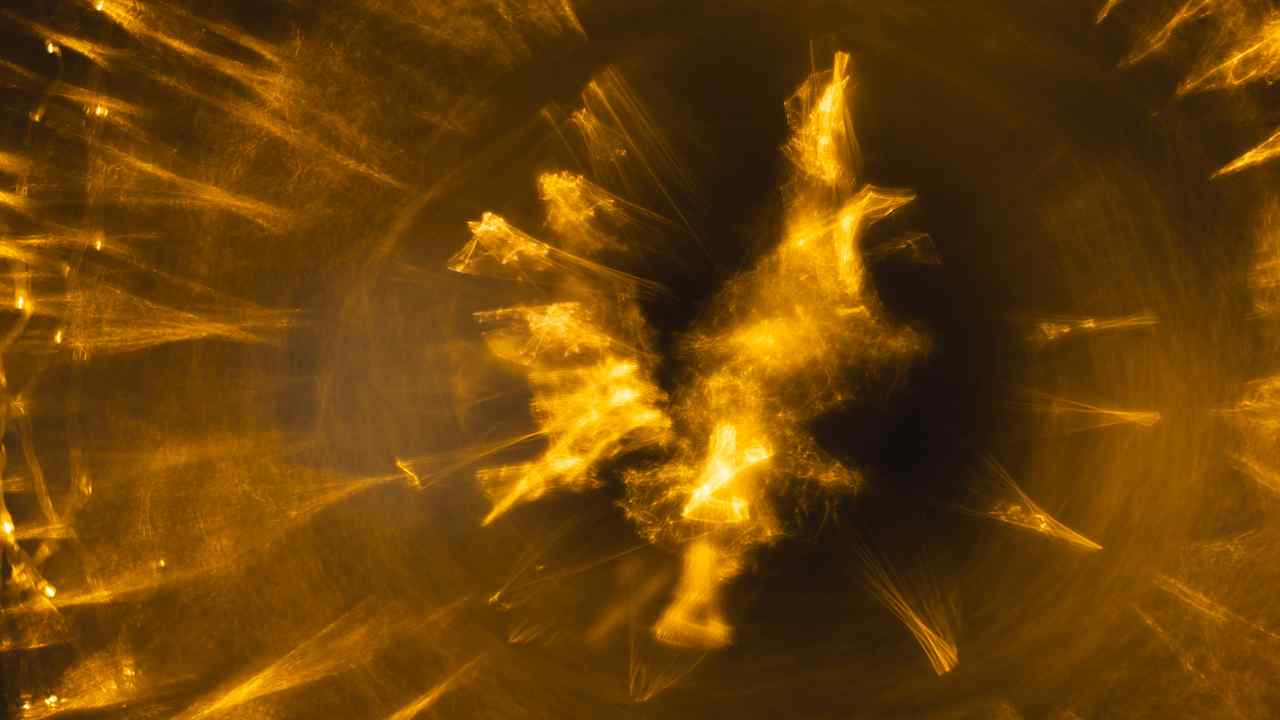
In the earliest moments after the Big Bang, the universe was nothing like the space we see today. There were no atoms, no stars, and no galaxies—just an extremely hot, dense soup of particles known as primordial plasma.
For hundreds of thousands of years, this plasma prevented light from traveling freely. The universe was bright, but that light was constantly scattered, making space opaque. Then, something remarkable happened: as the universe expanded and cooled, the plasma transformed into neutral atoms. This event, known as recombination, allowed light to travel unhindered for the first time.
That ancient light still fills the universe today as the cosmic microwave background (CMB). Understanding how the universe transitioned from plasma to atoms reveals one of the most important turning points in cosmic history.
The Plasma Universe: Hot, Dense, and Opaque
Right after the Big Bang, temperatures were so extreme that atoms could not exist. Instead, matter was broken down into its basic components:
- Protons
- Neutrons
- Electrons
- Photons
- NeutrinosThis plasma behaved like a glowing, ionized fog. Anytime an electron tried to join a proton to form a hydrogen atom, photons immediately knocked them apart again.
Why the universe was opaque:
- Electrons were free and abundant
- Photons constantly collided with them
- Light could not move in a straight lineScientists compare this state to trying to see through the interior of the Sun—light exists, but it cannot escape.
Expansion Cools Everything
As the universe expanded, its temperature dropped.This cooling set the stage for atoms to form.
Key milestones:
- At 1 second: temperature ~10 billion K
- At 3 minutes: nuclei of hydrogen and helium form
- At 380,000 years: temperature ~3000 KOnly at this lower temperature could electrons slow down enough to bond with nuclei.
Recombination: When Atoms Finally Formed
Around 380,000 years after the Big Bang, electrons began joining protons and helium nuclei to form neutral atoms.This process is called recombination, even though it was technically the first combination.
What recombination accomplished:
- Neutral atoms formed
- Free electrons declined dramatically
- Photon scattering decreased
- The universe turned from opaque to transparentSuddenly, photons could travel freely across space. These are the same photons we observe today as the cosmic microwave background.
The Release of the Cosmic Microwave Background
Once free electrons disappeared, light was no longer trapped.The universe became transparent, and photons streamed through space uninterrupted.Over billions of years:
- These photons stretched into microwaves due to cosmic expansion
- Their temperature cooled to 2.7 K
- They filled the sky uniformly with tiny fluctuationsThe cosmic microwave background acts as a snapshot of the universe right after recombination—a picture of the universe’s first moments of clarity.
Why Recombination Took So Long
Even though the temperature dropped below the required threshold earlier, atoms didn’t form immediately. Several factors slowed recombination:
1. Photons Outnumbered Electrons and Protons
There were billions of photons for every particle of matter.Most photons had enough energy to break atoms apart.
2. High-Energy Tail in Photon Distribution
Even when average energy was low, some photons remained energetic enough to ionize atoms.
3. Helium’s Role
Helium nuclei captured electrons earlier than hydrogen, but hydrogen controlled the overall transparency.Only when hydrogen recombined did the universe become truly transparent.
The Importance of Neutral Atoms
The formation of neutral atoms changed the physics of the universe entirely.
Before recombination:
- Photon pressure shaped matter
- Electrons and photons stayed locked together
- Sound waves formed in the plasma
After recombination:
- Matter and light separated
- Gravity dominated structure growth
- Gas clouds collapsed into stars and galaxiesRecombination ended the radiation-dominated period and opened the matter-dominated era of cosmic evolution.
Decoupling: The Moment When Light Broke Free
Although recombination and decoupling are often described together, they represent different physical events.
Recombination
Electrons join nuclei to form atoms.
Decoupling
Photons stop interacting with matter and travel freely.These processes happened close together in time but are scientifically distinct.
What Elements Formed During This Era?
The plasma-to-atom transition involved only a few elements—those produced during Big Bang nucleosynthesis.
Primary components:
- Hydrogen (~75% by mass)
- Helium (~25%)
- Trace amounts of deuterium and lithiumHeavier elements came much later, forged inside stars.
How This Transition Led to Galaxies
Once atoms formed, the smooth early universe began evolving into the complex structures we see today.
Steps toward galaxy formation:
- Gravity pulled slightly denser regions together
- Gas clouds collapsed
- Stars ignited
- Clusters and galaxies formed
- The cosmic web emergedWithout recombination, none of this could have happened.
Why This Moment Still Matters Today
The transition from plasma to atoms remains central to modern cosmology.It helps scientists study:
- The age of the universe
- How fast the universe is expanding
- The early density fluctuations
- The nature of dark matter and dark energyThe cosmic microwave background, formed during this transition, is one of the most important pieces of evidence for the Big Bang.
A Universe That Finally Became Clear
The shift from plasma to atoms transformed the universe from a blinding, opaque fog into a transparent, light-filled space.This single change allowed galaxies, stars, planets, and eventually life to form.Recombination didn’t just create atoms—it opened the universe for everything that came after.
More from Big Bang & the Expanding Universe
The First Galaxies: How Did They Form After the Big Bang?
Billions of galaxies fill the modern universe, from elegant spirals to giant ellipticals stretching across hundreds of thousands of light‑years. But the very first galaxies were nothing like these enormous systems. They were tiny, turbulent, fast‑changing structures that emerged from a universe still settling after the Big Bang.
Reionization: How the First Stars Transformed the Universe
Long before galaxies took their modern shapes and long before the Milky Way existed, the universe went through one of its most dramatic transformations. It began in darkness, filled with neutral hydrogen stretching across billions of light‑years. Then the first stars appeared—brilliant, massive, short‑lived giants.
What Triggered the First Stars to Ignite in the Early Universe?
Before the first stars formed, the universe was a dark, silent expanse. There were no galaxies, no planets, and no light—only vast clouds of hydrogen and helium drifting through space. This period, known as the Cosmic Dark Ages, lasted for nearly 100 million years after the Big Bang.
Explore More Topics
Gamma-Ray Bursts: The Universe’s Most Violent Explosions
Gamma-ray bursts (GRBs) are brief, powerful flashes of high-energy radiation that outshine entire galaxies for a few seconds. They occur randomly across the sky, often billions of light-years away, yet the energy they release is so intense that Earth-based detectors can pick them up instantly. These events push astrophysics to its limits and provide a rare glimpse into the universe’s most extreme processes.
What Happens Inside a Black Hole? Exploring the Unknown Interior
Black holes are among the most mysterious objects in the universe. While scientists understand how black holes form and how they interact with their surroundings, what happens inside a black hole remains one of the greatest unsolved mysteries in physics. Crossing the event horizon—the point of no return—takes you into a realm where spacetime is warped beyond recognition and where our current theories break down.
The Darkest Objects in the Universe: How We Detect Invisible Black Holes
Black holes are famous for being invisible. They emit no light, no radiation, and no signals that can be directly detected with traditional telescopes. Yet scientists have discovered dozens of them and mapped their behavior across the cosmos. How is this possible?