Are Smart Telescopes Worth It? A Beginner Buying Guide for 2026


Are Smart Telescopes Worth It? A Beginner Buying Guide for 2026
By Skylar SunLast reviewed: April 2026
Editorial disclosure: This article is an independent beginner buying guide. It is not sponsored by any telescope manufacturer. Product examples are used to explain buying categories, not to guarantee that one model is the best choice for every reader. If this page contains affiliate links, they do not affect the editorial judgment, product-category framing, or buying framework.
Article type: Evergreen beginner buying guide
Utility Box
- Best for: first-time buyers deciding between a smart telescope and a traditional beginner setup
- Not ideal for: advanced astrophotographers comparing sensors, mounts, filters, guiding systems, and post-processing workflows in detail
- Best buying use: deciding whether a smart telescope fits your observing habits before comparing individual models
- Reading time: about 11 minutes
- Core question: does a smart telescope remove enough friction to justify its price for a beginner in 2026?
- Short answer: often yes—but mainly for people who value ease, consistency, and actual use over raw aperture-per-dollar
- Disclosure: this guide explains buying categories and trade-offs. It is not a sponsored ranking or a guarantee that one model is right for every buyer
A lot of beginners think they are shopping for “more telescope.”
Usually, they are really shopping for fewer failed nights.
That is the better starting point, because astronomy does not arrive in real life as a clean specification sheet. It arrives on a cold weeknight, after dinner, when the clouds may or may not hold, when the tripod feels heavier than it did indoors, and when patience is being tested long before any galaxy or nebula shows up.
Picture two equally interested beginners on a windy January night.
One brings out a traditional setup, spends thirty to forty minutes adjusting, aiming, checking alignment, and trying to figure out whether the problem is the finder, the mount, the sky, or inexperience. Their fingers are cold, the clouds are starting to move in, and the session ends with uncertainty more than wonder.
The other puts a compact smart telescope outside, opens an app, waits a few minutes, then watches a target like the Orion Nebula slowly become more visible on a phone or tablet while standing inside the doorway with a warm drink.
That scene is not a promise. It is not how every night goes. But it explains why smart telescopes have become a serious beginner category by 2026.
They are not simply selling optics. They are selling a different ownership experience: fewer setup steps, easier targeting, automatic tracking, guided imaging, and a faster path from curiosity to something visible or shareable.
That does not make them automatically better. It makes them easier to use well.
For some buyers, that is exactly what makes them worth the money. For others, it is not. A traditional telescope can still offer stronger raw optical value, more direct visual immersion, and a better aperture-per-dollar argument. But that path usually asks more from the beginner up front.
This guide is built around that trade, not around hype.
Who This Article Is / Is Not For
This article is for:
- beginners choosing a first serious astronomy purchase
- parents, partners, or gift buyers trying not to buy the wrong kind of telescope
- city and suburban users who know convenience may determine whether the telescope gets used
- buyers deciding between a smart telescope and a traditional beginner setup
- people who care about guided use, screen-visible results, and a lower learning curve
This article is not for:
- experienced astrophotographers comparing advanced mounts, cooled cameras, and deep processing workflows
- buyers who already know they want a classic manual telescope
- advanced observers shopping primarily by optical specification
- anyone expecting a compact consumer device to override weather, light pollution, or physics
What This Article Does Not Claim
This article does not claim that smart telescopes are always better than traditional beginner telescopes.
It does not claim that a more automated workflow removes the effects of poor sky conditions, local obstructions, haze, clouds, or heavy light pollution.
It does not promise that one smart telescope model is the right answer for every beginner in 2026.
What Changed in the Smart Telescope Market by 2026
By 2026, smart telescopes are no longer only premium astronomy gadgets. Entry-level all-in-one imaging telescopes have made the category more realistic for beginners who want guided setup, automatic tracking, and screen-visible or shareable results without building a full astrophotography rig.
That does not make traditional telescopes obsolete. It changes the beginner decision.
The question is no longer only, “How much aperture can I buy?” It is also, “How much setup friction am I willing to accept before I stop using the telescope?”
That second question matters more than many first-time buyers expect. A telescope can look impressive on paper and still fail in ordinary life because it takes too long to set up, asks too much of a tired beginner, or turns a short clear window into a technical exercise.
A good beginner purchase survives storage, charging, weather, impatience, neighborhood lighting, and the fact that most people do not feel like doing complex setup on every clear night.
The Real Beginner Problem Is Not Optics First
Most beginner disappointment does not happen because people lose interest in the sky.
It happens because too many small things go wrong before the sky becomes rewarding.
The setup takes longer than expected.The mount is confusing.The object is harder to find than the video made it look.The sky is worse than the product photos implied.The family wants to see something now.The buyer is not sure whether the result is normal or disappointing.The telescope goes back inside.
This is the real problem smart telescopes are trying to solve.
A smart telescope usually combines target finding, tracking, imaging, and app control in one guided workflow. That means the buyer is paying not only for the hardware, but also for fewer decisions, fewer adjustments, and fewer ways for a short session to collapse.
That has value. But it is a specific kind of value.
If you want a more classic visual hobby, a manual telescope may still be the better first purchase. If you want a lower-friction path into repeatable sessions, a smart telescope often makes more sense.
Quick Buying Comparison
| Buyer type | Better fit | Why | Main trade-off |
|---|---|---|---|
| Wants the easiest first experience | Entry smart telescope | Fast setup, guided targeting, app-based workflow | Less raw optical value per dollar |
| Wants classic visual observing | Beginner Dobsonian or refractor | Direct eyepiece experience and stronger aperture value | More manual setup and learning |
| Wants shareable images | Smart telescope | Built-in tracking and imaging workflow | More screen-based than eyepiece-based |
| Wants planets first | Traditional telescope may be better | Planetary viewing often favors different optical priorities | Less automation |
| Wants a backyard astronomy system | Premium smart observatory system | More complete automated experience | High cost and less beginner flexibility |
| Buying for a family | Smart telescope may be easier | Several people can view together on a screen | Less classic eyepiece immersion |
When Smart Telescopes Are Usually Worth It
Smart telescopes tend to be worth the money when several of these conditions are true at the same time.
1. You care more about getting started than mastering setup
If your real goal is, “I want to observe tonight and keep doing this,” smart telescopes make a strong case for themselves. They reduce the distance between intention and use.
2. You live under imperfect skies
Smart telescopes can be especially attractive in cities and suburbs because guided workflows and image-building features can make early sessions feel less discouraging. But they do not turn a heavily light-polluted site into a dark-sky site. Streetlights, blocked horizons, haze, clouds, and limited sky visibility still matter.
What changes the experience is not magic. It is usually a combination of tracking, repeated short exposures, and software processing.
A simple way to think about live stacking is this: instead of trying to show you one perfect image all at once, the telescope collects many weaker images and gradually combines them. Imagine placing many faint transparent sheets on top of each other until the target becomes easier to see. That is why a nebula that looks like almost nothing to the naked eye can start to appear more clearly on a smart telescope screen over time.
This is also why smart telescopes can feel more forgiving under suburban skies. Some models, depending on configuration, include built-in light-pollution filters or app-switchable filters that may help reduce the impact of urban glow on certain targets. That still does not cancel physics. It simply gives the device a better chance to produce a usable result than a beginner looking through an eyepiece under the same sky.
A buyer with a narrow balcony view should still be more cautious than a buyer with an open backyard, even if both live in the same city.
3. You want images, not just eyepiece moments
This is one of the most important dividing lines. Some buyers want the tactile, direct experience of looking through an eyepiece. Others want a device that helps them build and save an image over time. Those are related but different experiences.
4. You know convenience changes your behavior
This sounds simple, but it is one of the strongest buying filters. A telescope that is easier to carry, faster to initialize, and less fragile in daily use may become the better telescope because it actually comes outside more often.
5. You are buying for shared use
Families and casual learners often get more value from a screen-visible session than from taking turns at an eyepiece. This does not make one format more serious than the other. It changes which format works better in practice.
When Smart Telescopes Are Not Worth It
They are not worth it just because the category is growing.
They are also not worth it for every beginner.
1. You mainly want classic visual observing
If your main dream is the old-fashioned experience of looking through glass at the Moon, Jupiter, or Saturn, a smart telescope may not be the best first answer.
2. You enjoy the craft side of astronomy
Some people genuinely like learning alignment, changing eyepieces, reading the sky, and understanding the mechanics. For them, automation can remove part of the appeal rather than unlock it.
3. You care most about aperture-per-dollar
This is still the strongest traditional telescope argument. Smart telescopes spend part of your budget on integration, software, app workflow, and automation. If raw optical value is your main metric, a traditional setup can still win.
4. You do not want another app-dependent device
A smart telescope is also a consumer electronics product. That means charging, firmware, wireless connection habits, mobile app use, and storage management are part of ownership.
Smart Telescope vs. Dobsonian: The Simple Beginner Difference
A Dobsonian usually gives beginners more visual telescope for the money. It is often the better choice if you want direct eyepiece use, especially for the Moon, planets, and brighter objects.
A smart telescope usually gives beginners a lower-friction path into finding targets, tracking them, and producing screen-visible or shareable results.
The practical difference is this:
- Choose a Dobsonian if you want visual immersion and aperture value.
- Choose a smart telescope if you want guided setup, automated tracking, and repeatable image-based sessions.
- Do not choose either one because marketing makes it sound like the only serious path.
This distinction matters because many beginner mistakes come from buying the wrong experience. Some people buy a smart telescope expecting a classic visual hobby. Others buy a manual telescope expecting a guided imaging workflow. Both end up disappointed for understandable reasons.
Why Balcony Use Is Harder Than It Looks
Balcony use sounds ideal in theory: you do not have to travel, the telescope stays close to home, and quick sessions feel possible.
In practice, balconies introduce two problems many beginners do not expect.
1. Sky-recognition blind spots
Many smart telescopes need enough visible sky to recognize star patterns, orient themselves, and confirm where they are pointing. In amateur astronomy, that sky-recognition step is often described as plate solving.
If walls, ceilings, railings, and overhangs leave too little open sky, the telescope may struggle to identify its position reliably. The result is not always a complete failure, but setup can become less smooth, target selection becomes more limited, and the “smart” part of the experience may feel less smart.
2. Thermal currents near buildings
A balcony is also close to walls, windows, vents, heated interiors, and surfaces that release stored heat. That can create local air turbulence. To a beginner, the stars may look softer, swollen, or less stable than expected, even on a clear night.
This does not mean balconies are useless. It means buyers should evaluate sky visibility and local air behavior, not just whether the telescope physically fits in the space.
The 2026 Buying Map
A useful way to look at the 2026 market is not by brand first, but by ownership style.
Type 1: Entry smart telescopes
This is the category for people who want the easiest realistic entry into use.
Examples in this segment include compact app-controlled systems in the Seestar-style and DWARF-style range. In broad terms, this is where beginners encounter the strongest “fewer steps” argument. You are not paying for the most ambitious setup. You are paying for a device that has a real chance of surviving ordinary life.
This is also the category where price became more beginner-relevant. As checked in April 2026, official listed prices for examples such as the Seestar S30 Pro and DWARF 3 were still around the $500–$600 range before accessories, taxes, shipping, or regional differences. That keeps the entry-level smart telescope decision closer to a serious beginner purchase than a multi-thousand-dollar observatory commitment.
Type 2: Premium portable smart telescopes
This tier is for buyers who already know they care enough to pay for a more refined all-in-one experience.
Examples in this category may include Vaonis-style or Unistellar-style portable systems, depending on the current model and configuration. Buyers here are usually paying for a smoother integrated ownership path, more premium design, stronger software polish, and a more mature portable system rather than one isolated specification.
This is where a beginner should pause and ask a harder question: am I paying for meaningful fit, or for reassurance?
Type 3: Intelligent home observatory systems
This is where the purchase starts to become a backyard astronomy system rather than a simple first-device experiment.
Examples in this higher tier may include Celestron Origin-style home observatory systems. These can be impressive and genuinely useful, but they are rarely the right answer for unresolved beginner uncertainty.
A beginner should not move into this tier just to avoid making an earlier decision. Higher price does not automatically produce better fit.
Decision Framework by Stage
Stage 1: Decide where this telescope will actually live
Ask:
- Where will I use it most often: balcony, backyard, driveway, park, or travel?
- Will I need to carry it often?
- Can I store it somewhere that makes quick use realistic?
A telescope that sounds portable in a review may still feel inconvenient in your own home.
Stage 2: Decide what kind of observing experience you want
Ask:
- Do I mainly want visual observing, image-based observing, or a mix?
- Will I care more about the Moon and planets, or about guided deep-sky exploration?
- Am I comfortable using a phone or tablet as the main interface?
A surprising number of buying mistakes happen because people answer these questions too vaguely.
Stage 3: Match your budget to your likely usage
Ask:
- If this works as promised, how often will I use it in the first three months?
- Will I actually bring it outside on ordinary weeknights?
- If I stop using it, what will the real reason be: time, complexity, sky conditions, or fading interest?
The wrong first telescope is often the one that only makes sense on your best possible nights.
A Practical Budget Rule for Beginners
Before choosing a model, divide your budget into three parts:
- the telescope itself
- accessories, storage, power, tripod, or carrying needs
- the cost of being wrong
The third category matters more than it seems. A lower-cost telescope that gets used regularly may be a far better first purchase than a premium device bought before the buyer understands their own habits.
A more practical way to think about this is cost per use.
A $1,000 setup that gets dragged outside twice in a year has a much worse beginner value story than a $500 smart telescope that gets used almost every week. On paper, the first purchase may look more serious. In real life, the second may be the one that actually builds an astronomy habit.
This is why convenience can change the economics of ownership.
🔭 Cost Per Use Calculator
Adjust the sliders to see how convenience changes the real value of your telescope.
Traditional Manual Setup
Smart Telescope
The safest beginner budget is not the smallest number. It is the amount you can spend without forcing the telescope to prove your long-term identity immediately.
Stage 4: Think about the second purchase before the first
Ask:
- If I enjoy this, what will I want next: better images, more manual control, larger aperture, or more portability?
- Do I want this first purchase to be a safe entry point or a long-term main device?
This is a healthier question than asking which telescope is the ultimate beginner answer.
What NOT To Do / Common Mistakes
- Do not buy mainly by magnification language.
- Do not assume automation erases poor sky conditions.
- Do not spend premium money just to avoid making a clearer choice.
- Do not confuse marketing images with likely first-week results.
- Do not ignore storage, battery habits, and setup routine.
- Do not buy a screen-based system if what you really want is an eyepiece-centered hobby.
- Do not assume a balcony is automatically a good observing location just because a telescope is compact.
A Better First 30 Days With a Smart Telescope
If you buy a smart telescope, do not judge it only by the first night. Use the first month to learn your real observing pattern.
A practical first-month plan looks like this:
- Night 1: learn setup, charging, app connection, and basic targeting
- Night 2: try the Moon or another bright easy target
- Night 3: try one beginner-friendly deep-sky object
- Night 4: repeat a target under different conditions and compare the result
- Night 5: decide whether your main obstacle is sky quality, time, patience, storage, or expectations
This is useful because it turns the purchase from a novelty test into a habit test.
A Copyable Reality Check
Copy this and answer it honestly before buying:
I will usually observe from ________.My sky is usually ________.I care most about seeing or capturing ________.I am willing to spend about ________ minutes setting up.I care more about convenience / visual immersion / image sharing / manual learning.If setup feels annoying on a weeknight, I will probably ________.My real budget limit is ________.The main reason I want a smart telescope is ________.
If your answers point toward convenience, repeat use, and guided sessions, a smart telescope may be worth the money.
If your answers point toward direct visual observing, manual learning, and aperture value, a traditional telescope may be the stronger first move.
FAQ
What is the best smart telescope for a beginner?
The best beginner smart telescope is usually the one that matches your observing routine, not the one with the most dramatic marketing imagery. A city user with limited time may need fast setup and reliable app control. A backyard user with more patience may care more about stability, image-building behavior, or long-term ownership value.
Is a smart telescope better than a Dobsonian?
Not for every buyer. A Dobsonian often gives stronger visual aperture value for the money. A smart telescope usually gives a simpler automated path to finding, tracking, and imaging targets. The better choice depends on whether you want visual observing or low-friction image-based observing.
Can a smart telescope replace a traditional telescope?
It can replace a traditional telescope for some beginners, especially those who mainly want guided sessions and shareable images. It may not replace a traditional telescope for people who want eyepiece immersion, manual learning, or maximum visual performance per dollar.
Are smart telescopes good for kids and families?
They can be, especially because several people can look at a screen together instead of taking turns at an eyepiece. The drawback is that the experience may feel more like using a connected device than learning a classic hands-on telescope.
Do smart telescopes work well from balconies?
Sometimes, but balcony use depends heavily on sky visibility. Narrow sky windows, nearby lights, railings, walls, and blocked horizons can limit what the telescope can target. A balcony buyer should evaluate available sky first and advanced features second.
What budget is realistic for a first smart telescope?
A realistic budget depends on whether you are buying an entry smart telescope, a premium portable system, or a home-observatory-style setup. Beginners should avoid spending at the top of the market only to solve uncertainty. Spend more when you already know that convenience, automation, and image-based observing are the reasons you will keep using the device.
Are smart telescopes good for planets?
They can be enjoyable for bright solar system targets, especially the Moon, but buyers should be careful not to choose one solely because they want the most traditional planetary viewing experience. That is not always where the category feels strongest.
Because smart telescope models, prices, and software features change over time, readers should confirm current specifications and regional pricing before making a final purchase.
How This Article Was Reviewed
This article was reviewed as an editorial buying guide, not a sponsored product ranking.
No product example is presented as a universal best choice, and no buying recommendation should replace checking current specifications, prices, availability, and warranty terms before purchase.
The judgment framework in this piece was built around:
- official manufacturer information for current smart telescope product lines
- beginner skywatching guidance from NASA
- practical ownership factors that affect repeat use, including setup time, storage, charging, app dependency, observing location, and sky quality
- the difference between visual observing and image-based smart telescope workflows
Official references reviewed for this article include:
- NASA Skywatching — accessed April 2026
- NASA Skywatching FAQ — accessed April 2026
- Seestar official product pages — accessed April 2026
- DWARFLAB official product pages — accessed April 2026
- Vaonis official product pages — accessed April 2026
- Unistellar official product pages — accessed April 2026
- Celestron Origin official product pages — accessed April 2026
For readers who want the source pages directly:
- NASA Skywatching
- NASA Skywatching FAQ
- Seestar official product pages
- DWARFLAB official product pages
- Vaonis official product pages
- Unistellar official product pages
- Celestron Origin official product pages
This article should be updated when major smart telescope models, prices, software features, or beginner-relevant product categories change.
Why You Can Trust This Article
This article does not assume that every beginner should buy the same kind of telescope.
It does not treat automation as magic, and it does not treat traditional gear as outdated. It uses a narrower and more useful standard: what kind of telescope is most likely to be used well by a real beginner with a real budget, a real home, and ordinary sky conditions.
That makes the advice less dramatic than many product roundups, but more useful for avoiding the most common first-purchase mismatch: buying the telescope that sounds impressive instead of the telescope the buyer will actually use.
So, Are Smart Telescopes Worth It?
For the right beginner, yes.
They are worth it when convenience is not a luxury feature, but the difference between using the telescope often and leaving it indoors. They are worth it when a buyer wants guided setup, easier target finding, and a smoother path into image-based observing. They are worth it when the biggest threat is not lack of interest in the sky, but friction.
But they are not automatically worth it just because they are newer or smarter.
A buyer who wants a direct eyepiece hobby, stronger aperture-per-dollar, and more manual control may still be better served by a traditional telescope. There is nothing outdated about that path.
The real beginner mistake is not choosing a traditional telescope or a smart telescope. It is choosing the wrong observing life and asking the hardware to fix that mismatch later.
More from Solar System Basics

The Moon’s Origin: How Earth Got Its Only Natural Satellite
Earth’s Moon is so familiar and constant that it’s easy to forget just how strange its existence is. Compared with other moons in the solar system, it is enormous relative to its parent planet, unusually dense, and positioned in a way that profoundly affects Earth’s tides, climate stability, and even the evolution of life.

Why Mercury Has Extreme Temperatures: A Planet of Extremes
Mercury looks like a simple world at first glance—small, rocky, and covered in craters. But beneath that quiet appearance lies one of the most extreme environments in the solar system. Its temperature swings from scorching heat to freezing cold, making Mercury a planet of brutal contrasts unlike anywhere else.
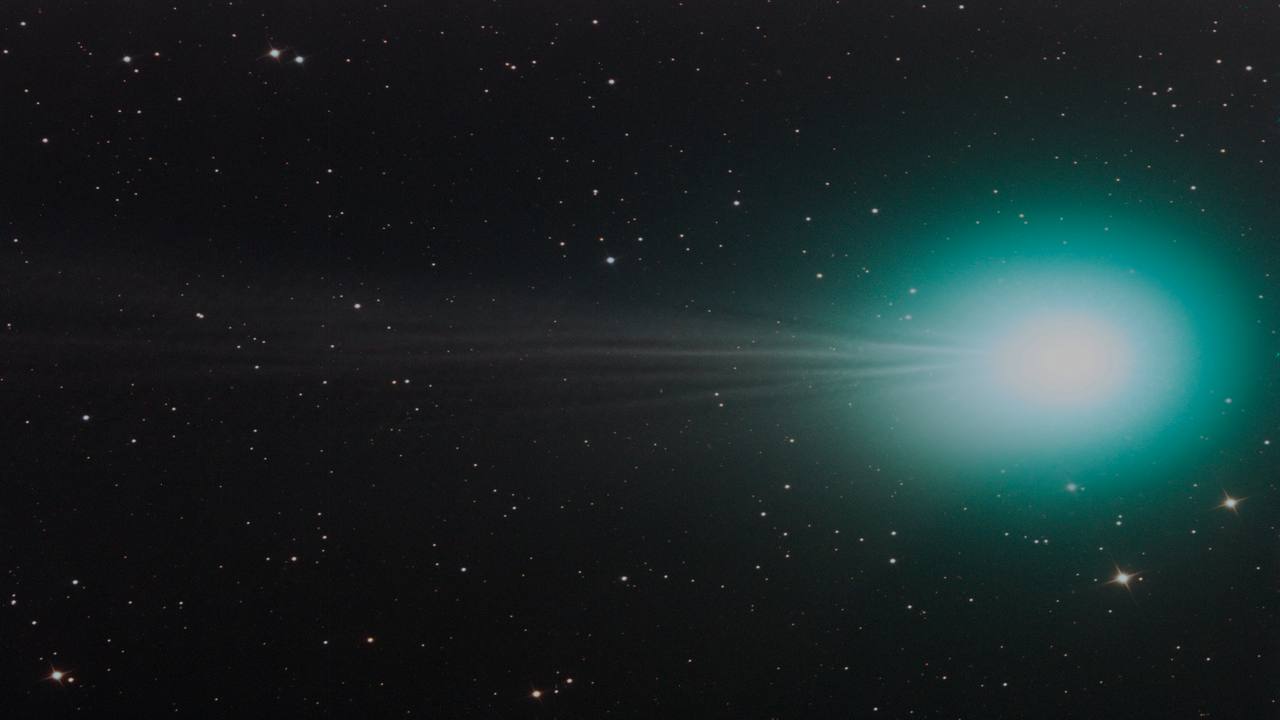
Comets vs. Asteroids: What’s the Real Difference?
At first glance, comets and asteroids may seem like similar space rocks drifting through the solar system. Both orbit the Sun, both are relics from the solar system’s formation, and both occasionally pass close to Earth. But despite these similarities, the two types of objects are born in very different environments and behave in dramatically different ways. Understanding these differences helps scientists trace our solar system’s history and study the conditions that shaped Earth.
Explore More Topics

Gamma-Ray Bursts: The Universe’s Most Violent Explosions
Gamma-ray bursts (GRBs) are brief, powerful flashes of high-energy radiation that outshine entire galaxies for a few seconds. They occur randomly across the sky, often billions of light-years away, yet the energy they release is so intense that Earth-based detectors can pick them up instantly. These events push astrophysics to its limits and provide a rare glimpse into the universe’s most extreme processes.
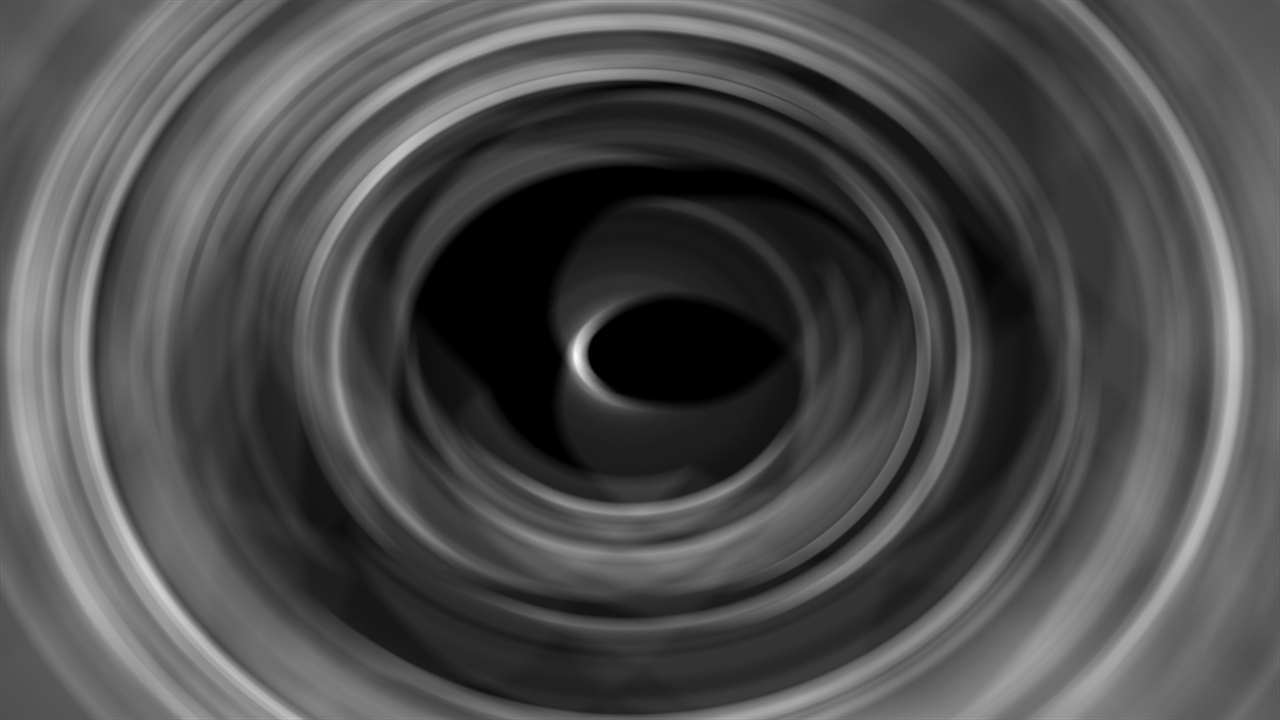
What Happens Inside a Black Hole? Exploring the Unknown Interior
Black holes are among the most mysterious objects in the universe. While scientists understand how black holes form and how they interact with their surroundings, what happens inside a black hole remains one of the greatest unsolved mysteries in physics. Crossing the event horizon—the point of no return—takes you into a realm where spacetime is warped beyond recognition and where our current theories break down.
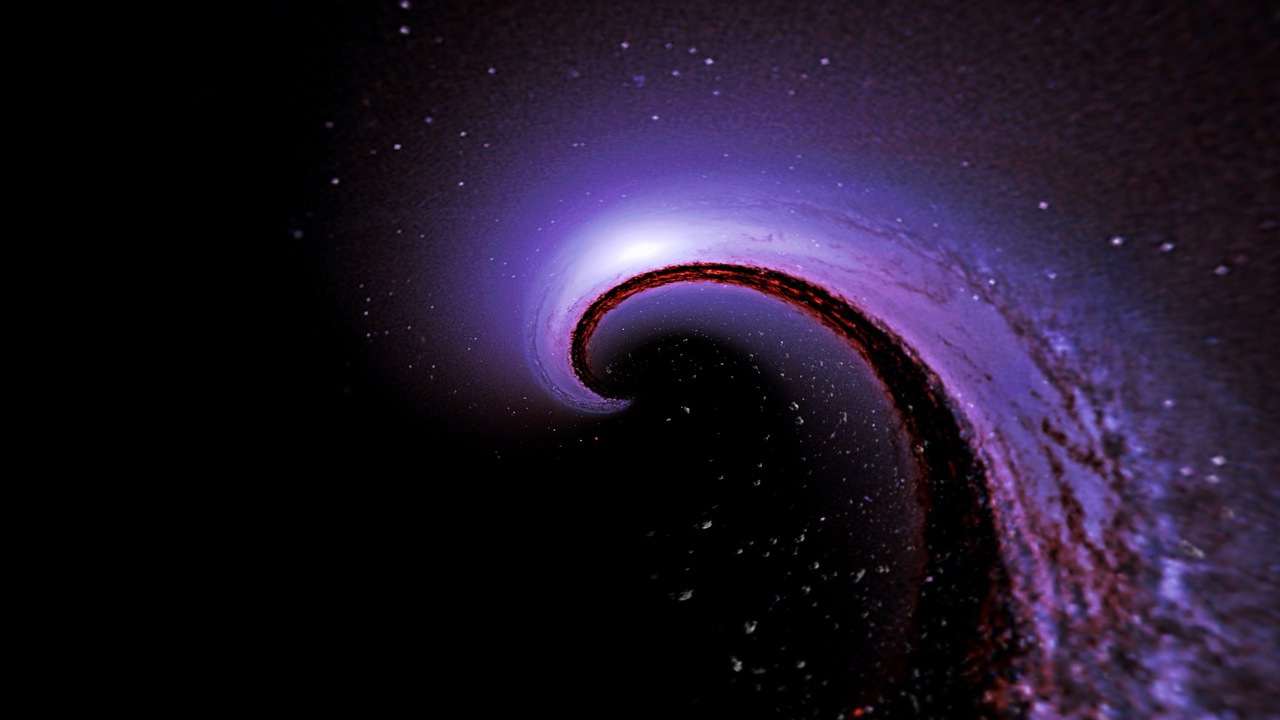
The Darkest Objects in the Universe: How We Detect Invisible Black Holes
Black holes are famous for being invisible. They emit no light, no radiation, and no signals that can be directly detected with traditional telescopes. Yet scientists have discovered dozens of them and mapped their behavior across the cosmos. How is this possible?