Comets vs. Asteroids: What’s the Real Difference?
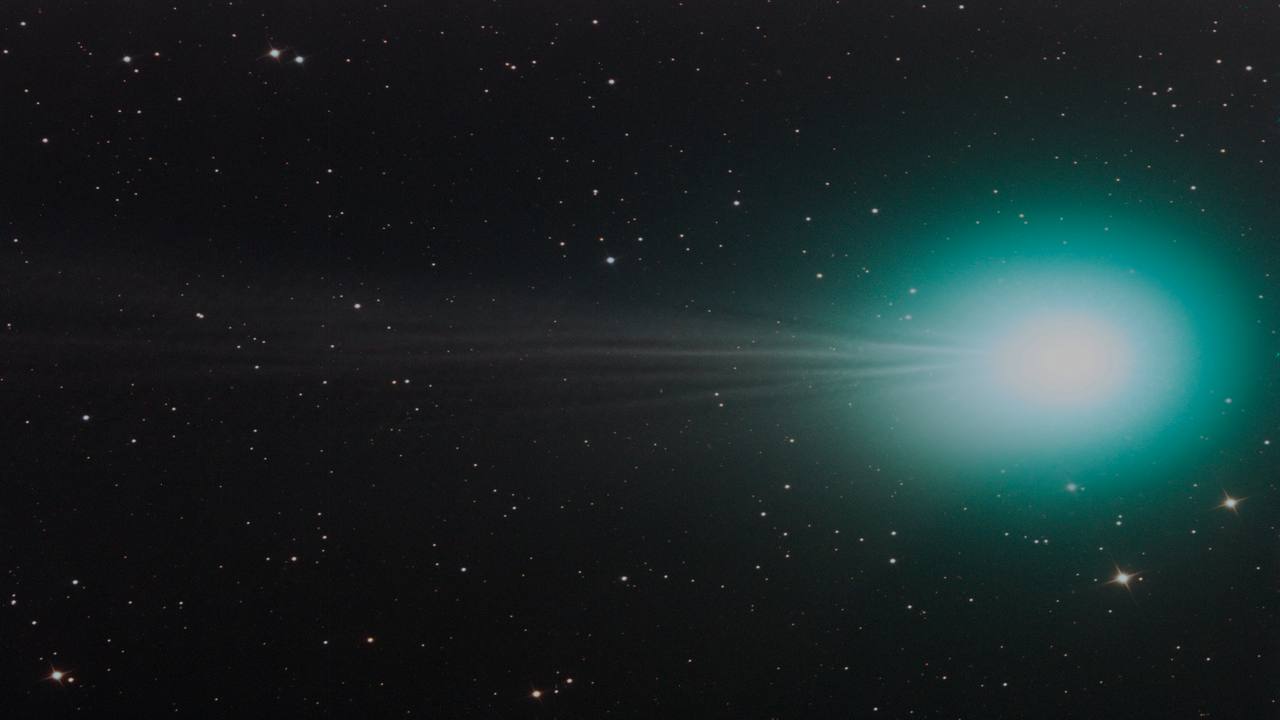
At first glance, comets and asteroids may seem like similar space rocks drifting through the solar system. Both orbit the Sun, both are relics from the solar system’s formation, and both occasionally pass close to Earth. But despite these similarities, the two types of objects are born in very different environments and behave in dramatically different ways.
Where They Come From
The biggest difference begins with origin.Comets and asteroids formed in completely different parts of the early solar system.
Asteroids: Born in the Inner Solar System
Asteroids formed between Mars and Jupiter, where it was warm enough for most ices to evaporate.As a result, they are mostly composed of:
- Rock
- Metals
- Minerals similar to Earth’s crustThey resemble miniature, leftover building blocks of rocky planets.
Comets: Born in the Frozen Outer Solar System
Comets formed far from the Sun, in extremely cold regions like:
- The Kuiper Belt
- The Oort CloudTheir composition includes:
- Water ice
- Carbon dioxide ice
- Methane and ammonia
- Dust and rockThey are often described as “dirty snowballs.”
Composition and Structure
The materials inside these bodies influence how they behave.
Asteroids
- Primarily rock and metal
- Solid and dense
- Less reflective
- No atmosphere or comaSome asteroids are rubble piles, loosely held together by gravity.
Comets
- Ice mixed with dust and organic compounds
- Extremely low density
- Often porous
- Dark surfaces with bright jets when activeWhen heated, comets can burst with dramatic plumes of gas and dust.
Why Comets Grow Tails
One of the most recognizable differences between comets and asteroids is the tail.
Comets develop tails
When a comet approaches the Sun:
- Its surface warms
- Ice vaporizes
- Jets of gas and dust escape
- Sunlight pushes material outwardThis creates:
- A glowing coma around the comet
- A dust tail curved by the comet’s motion
- A solar wind tail pointing directly away from the SunComets can develop tails millions of kilometers long.
Asteroids do not
Asteroids rarely show such activity because they lack significant ice.However, a few unusual “active asteroids” can briefly mimic comets when they collide with other bodies or break apart.
How They Move Through the Solar System
Comets and asteroids have different orbital patterns.
Asteroids
- Most orbit steadily in the asteroid belt
- Some drift into near-Earth orbits
- Their paths are usually stable and predictable
Comets
- Often follow elongated, eccentric orbits
- Some take thousands of years to complete one orbit
- Their trajectories bring them far beyond the planetsLong-period comets can come from the Oort Cloud, a region around the solar system extending up to a light-year away.
What Happens When They Approach Earth?
Both asteroids and comets can become near-Earth objects (NEOs), but their threat profiles differ.
Asteroids
- More common near Earth
- Usually detected earlier
- Impact risk increases if orbits drift inward
Comets
- Less common but potentially more dangerous
- Travel faster
- Offer less warning time
- Can produce multiple fragmentsFortunately, catastrophic impacts from either type are extremely rare.
Historical Encounters
A few events highlight the differences:
The Tunguska Event (1908)
Likely a small asteroid or comet fragment that exploded in Earth’s atmosphere.
Comet Shoemaker–Levy 9 (1994)
A comet that broke apart and collided with Jupiter, demonstrating how fragile cometary bodies can be.
The Chelyabinsk Meteor (2013)
A small asteroid entering Earth’s atmosphere, causing a powerful shockwave.These events show how both types of objects interact with planets in different ways.
Which One Is More Common?
Asteroids are far more numerous within the inner solar system.Comets exist in huge numbers too, but most remain in distant, frozen regions and rarely venture inward.Estimated populations:
- Asteroids: Millions in the asteroid belt
- Comets: Trillions in the Oort Cloud, but only a tiny fraction ever approach the SunAsteroids are the ones we encounter—or worry about—more often.
Why Comets Are Scientifically Valuable
Comets preserve pristine material from the solar system’s birth.Because they formed far from the Sun, their ices contain:
- Ancient water
- Organic compounds
- Volatile moleculesStudying them helps scientists understand:
- Where Earth’s water came from
- How organic molecules spread through the solar system
- What the early solar system was likeMissions like Rosetta revealed complex organic chemistry on comets, including amino acid precursors.
Why Asteroids Matter Too
Asteroids help scientists study:
- Planet formation
- The building blocks of rocky worlds
- How gravitational interactions shape orbitsSome asteroids contain metals like iron, nickel, and even platinum-group elements.Future missions may explore mining potential.
When the Lines Blur
Some objects don’t fit neatly into one category.Examples include:
- Main-belt comets — asteroids with icy activity
- Dormant comets — former comets that lost their ices
- Centaur objects — hybrids between asteroids and cometsThese challenge the simple definitions and show that solar system bodies exist on a spectrum.
A Clear but Complex Difference
While comets and asteroids share some traits, their differences reveal how diverse the solar system truly is.Comets tell stories of cold, distant regions.Asteroids reveal the history of the inner planets.Together, they provide a dynamic record of the solar system’s past, helping scientists understand how Earth—and everything on it—came to be.
More from Solar System Basics
Are Smart Telescopes Worth It? A Beginner Buying Guide for 2026
This is why convenience can change the economics of ownership.

The Moon’s Origin: How Earth Got Its Only Natural Satellite
Earth’s Moon is so familiar and constant that it’s easy to forget just how strange its existence is. Compared with other moons in the solar system, it is enormous relative to its parent planet, unusually dense, and positioned in a way that profoundly affects Earth’s tides, climate stability, and even the evolution of life.
Why Mercury Has Extreme Temperatures: A Planet of Extremes
Mercury looks like a simple world at first glance—small, rocky, and covered in craters. But beneath that quiet appearance lies one of the most extreme environments in the solar system. Its temperature swings from scorching heat to freezing cold, making Mercury a planet of brutal contrasts unlike anywhere else.
Explore More Topics
Gamma-Ray Bursts: The Universe’s Most Violent Explosions
Gamma-ray bursts (GRBs) are brief, powerful flashes of high-energy radiation that outshine entire galaxies for a few seconds. They occur randomly across the sky, often billions of light-years away, yet the energy they release is so intense that Earth-based detectors can pick them up instantly. These events push astrophysics to its limits and provide a rare glimpse into the universe’s most extreme processes.

What Happens Inside a Black Hole? Exploring the Unknown Interior
Black holes are among the most mysterious objects in the universe. While scientists understand how black holes form and how they interact with their surroundings, what happens inside a black hole remains one of the greatest unsolved mysteries in physics. Crossing the event horizon—the point of no return—takes you into a realm where spacetime is warped beyond recognition and where our current theories break down.
The Darkest Objects in the Universe: How We Detect Invisible Black Holes
Black holes are famous for being invisible. They emit no light, no radiation, and no signals that can be directly detected with traditional telescopes. Yet scientists have discovered dozens of them and mapped their behavior across the cosmos. How is this possible?