Why Spiral Galaxies Have Their Iconic Swirl Shape
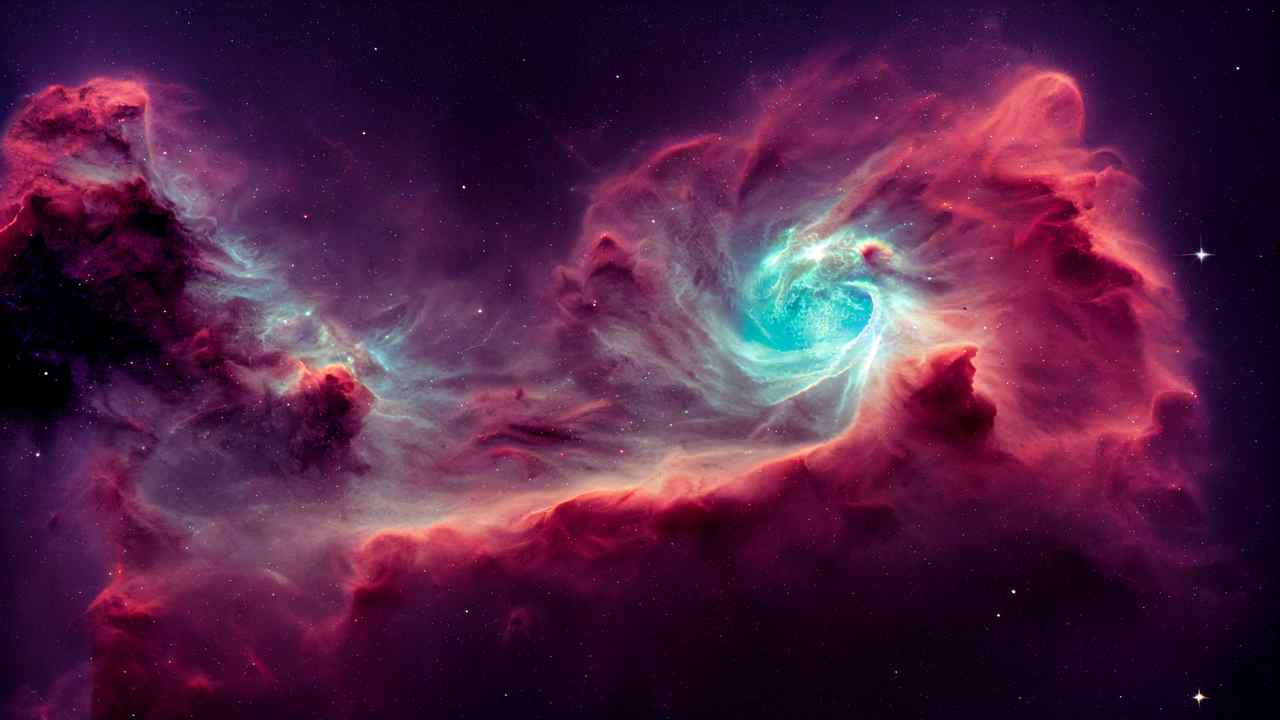
Spiral galaxies are some of the most recognizable structures in the universe. Their sweeping arms, bright centers, and graceful curves make them look almost artistic—yet their shape is not just visually striking. It reflects deep physical processes that govern how stars, gas, and dark matter move on galactic scales.
A Galaxy Built on Rotation
The foundation of every spiral galaxy’s shape is rotation.Spiral galaxies rotate around a central bulge, with stars on the inside completing orbits faster than stars on the outside. This rotational pattern stretches material into elongated arcs, creating the familiar spiral form.Unlike a solid object, a galaxy does not rotate as one piece. Instead:
- Stars closer to the center orbit more quickly
- Outer stars lag behind
- Gas and dust follow similar patternsThis difference in orbital speeds sets the stage for spiral structure.
The Density Wave Theory: Patterns, Not Trails
One of the biggest breakthroughs in galactic astronomy was the realization that spiral arms are not solid structures or fixed star groups. Instead, they behave like traffic jams.This is known as the density wave theory.
How it works:
- Stars and gas orbit the galaxy
- A spiral-shaped region of slightly higher density forms
- As stars pass through, they slow down slightly
- Gas clouds compress, triggering star formation
- The pattern persists even though individual stars move onIn this model, spiral arms are like glowing highways—dense regions that stars move in and out of, not fixed chains of material.
Why Spiral Arms Glow So Brightly
If spiral arms are just density waves, why do they stand out so clearly?The answer lies in star formation.
What happens when gas enters a density wave?
- Gas clouds collide
- Pressure increases
- New stars igniteThese newborn stars include massive blue stars that burn extremely brightly. Although short‑lived, they illuminate the arms dramatically before exploding as supernovae. This is why spiral arms appear bright:
- They host active star formation
- They contain many luminous young stars
- They stand out against older, dimmer stars elsewhere in the galaxy
Dark Matter Shapes the Spiral Structure
Dark matter—an invisible substance that makes up most of a galaxy’s mass—plays a crucial role in maintaining the spiral shape.Dark matter creates a halo around the galaxy, influencing orbital speeds. Without it:
- Outer stars would rotate too slowly
- The spiral structure would wind up tightly
- Arms would fade over timeDark matter stabilizes spiral patterns by ensuring the galaxy rotates in a way that preserves its overall structure. Even though dark matter cannot be seen, its gravitational fingerprint is essential for understanding spiral galaxies.
Barred Spirals: A Twist on the Classic Shape
Not all spirals look the same. Many have a bright bar running through the center—these are called barred spiral galaxies.The Milky Way is one of them.Bars form when:
- The central region becomes elongated
- Rotational dynamics amplify asymmetries
- Stars funnel toward the center
- Gas channels inward, fueling star formationBars may act as a mechanism that redistributes material across the galaxy, helping spiral arms grow and evolve.
How Spiral Galaxies Grow Their Arms
Spiral arms are dynamic—they can change shape, grow, or fade depending on conditions in the galaxy.Arms may grow due to:
- Interactions with small satellite galaxies
- Gas infall from intergalactic space
- Internal gravitational instabilities
- Tidal forces from passing galaxiesSome galaxies even show flocculent spirals—patchy, fluffy-looking arms created by localized star formation rather than large-scale waves.
The Role of Galaxy Collisions
Even though spiral galaxies appear orderly, they often live in crowded cosmic neighborhoods. When galaxies interact, dramatic things can happen:
- Arms can stretch dramatically
- New spiral patterns can form
- Bars can appear or disappear
- Star formation can surgeSurprisingly, gentle interactions often enhance spiral structure rather than destroy it.Only violent collisions tend to transform spirals into elliptical galaxies.
Why Spiral Galaxies Are Common Today
Spiral galaxies dominate the modern universe, especially in lower-density regions. Several factors contribute to their abundance:
- They retain their gas for long periods
- They continue forming new stars
- They avoid frequent destructive collisions
- Their rotation stabilizes their shapeIn contrast, elliptical galaxies tend to form in crowded clusters where collisions are more common.
A Self-Sustaining Shape
The iconic swirl of a spiral galaxy is not a frozen snapshot—it is a pattern maintained by ongoing processes:
- Differential rotation
- Density waves
- Gas compression
- Star formation
- Dark matter structureThe interplay of these forces keeps the arms recognizable even as the galaxy evolves over billions of years. Spiral galaxies may look serene, but their beauty comes from a complex dance of motion, gravity, and astrophysical activity happening on a vast scale.
More from Galaxies & Cosmic Structures
The Local Group: Our Galaxy’s Immediate Cosmic Neighborhood
When we look up at the night sky, the Milky Way seems immense—an island of hundreds of billions of stars. But on a cosmic scale, our galaxy is far from alone. It belongs to a small cluster of galaxies known as the Local Group, a gravitationally bound community that stretches millions of light‑years across.
How Galaxy Collisions Give Birth to New Stars
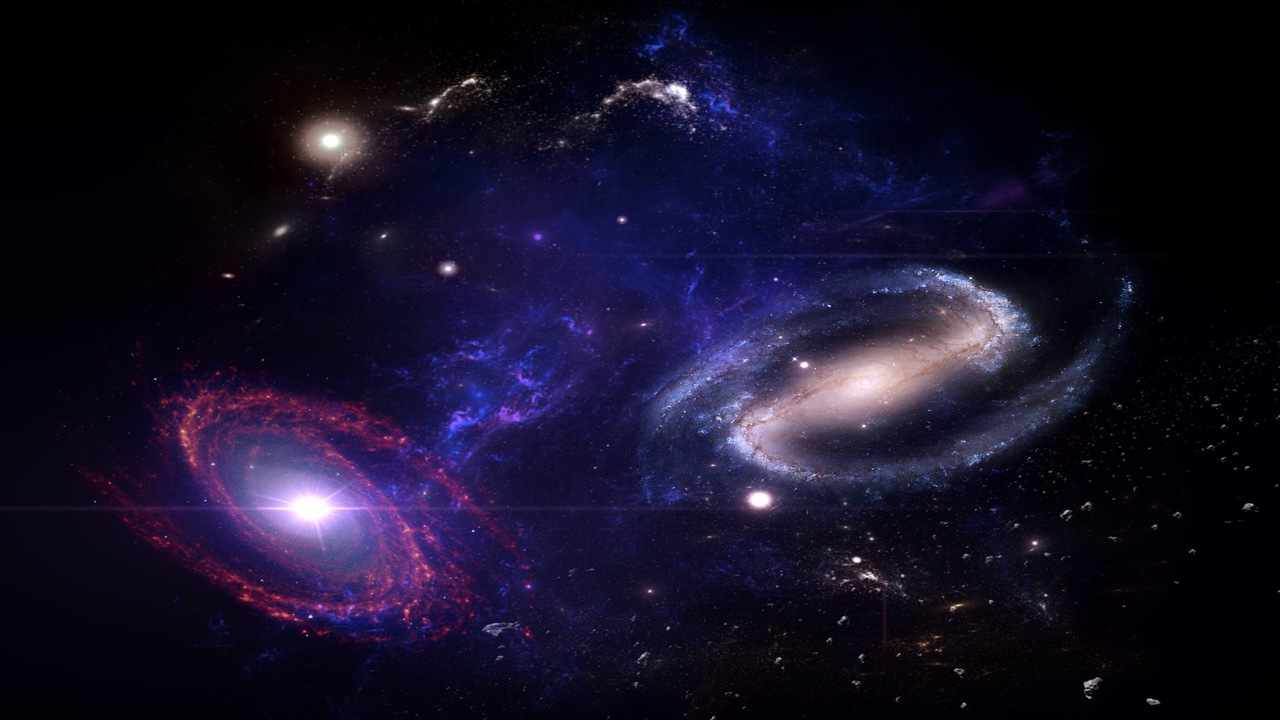
When two galaxies collide, the first image that comes to mind might be one of cosmic destruction—stars smashing into each other, planets shattering, and entire systems being torn apart. The truth is far more surprising: galaxy collisions are one of the universe’s most creative processes. Instead of destroying stars, collisions often trigger the birth of new ones.
Cosmic Web: The Hidden Skeleton of the Universe
On the largest scales, the universe does not look random.It is the universe’s hidden skeleton: a vast network shaped by gravity, dark matter, and the expansion of space itself. Understanding this structure is essential for understanding how galaxies form, evolve, and connect across billions of light‑years.
Explore More Topics
Gamma-Ray Bursts: The Universe’s Most Violent Explosions
Gamma-ray bursts (GRBs) are brief, powerful flashes of high-energy radiation that outshine entire galaxies for a few seconds. They occur randomly across the sky, often billions of light-years away, yet the energy they release is so intense that Earth-based detectors can pick them up instantly. These events push astrophysics to its limits and provide a rare glimpse into the universe’s most extreme processes.
What Happens Inside a Black Hole? Exploring the Unknown Interior
Black holes are among the most mysterious objects in the universe. While scientists understand how black holes form and how they interact with their surroundings, what happens inside a black hole remains one of the greatest unsolved mysteries in physics. Crossing the event horizon—the point of no return—takes you into a realm where spacetime is warped beyond recognition and where our current theories break down.
The Darkest Objects in the Universe: How We Detect Invisible Black Holes
Black holes are famous for being invisible. They emit no light, no radiation, and no signals that can be directly detected with traditional telescopes. Yet scientists have discovered dozens of them and mapped their behavior across the cosmos. How is this possible?