Why Jupiter Is the Solar System’s Great Protector
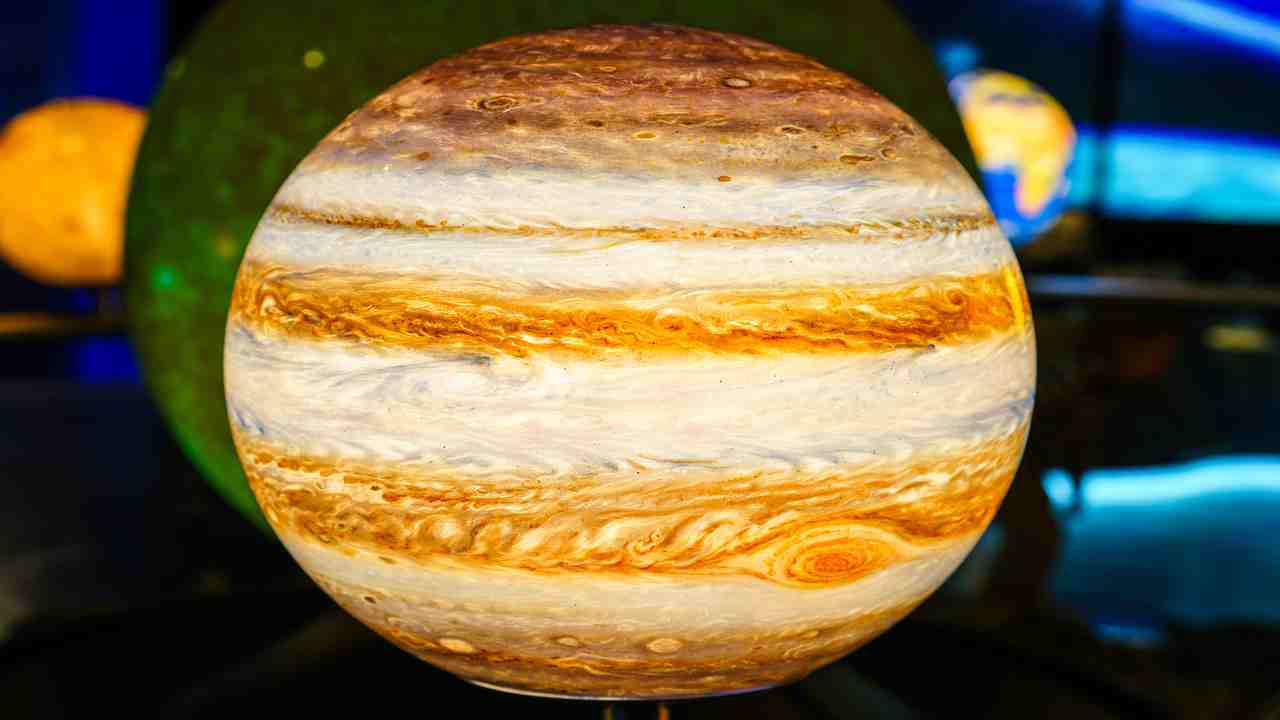
Jupiter is often called the “guardian” of the solar system, a planet so massive and influential that it shapes the paths of asteroids, comets, and even other planets. Its gravitational pull is unmatched among the planets, and its role in stabilizing our cosmic neighborhood may have been crucial for Earth’s habitability.This article takes a closer look at why Jupiter behaves like a shield, how it protects the inner planets, and what would happen if it weren’t there.
The Immense Mass of Jupiter
Jupiter contains more than twice the mass of all other planets combined. Its sheer mass gives it enormous gravitational influence.Because of this:
- It alters the orbits of passing comets
- It captures or ejects dangerous objects
- It shapes the asteroid belt
- It prevents or enables collisionsTo put it simply, Jupiter is the solar system’s gravitational giant.
How Jupiter Redirects Potential Threats
Many of the objects that could collide with Earth originate in the outer solar system, especially long-period comets and unstable asteroids. When these bodies move inward, they often pass near Jupiter.
What Jupiter typically does:
- Deflects them into harmless orbits
- Ejects them entirely from the solar system
- Captures them as moons or temporary companions
- Breaks them apart with tidal forcesJupiter’s gravitational pull acts as a barrier, reducing the number of dangerous impactors that ever reach Earth.
The Asteroid Belt: Balanced by Jupiter’s Gravity
The asteroid belt between Mars and Jupiter might seem chaotic, but its structure is actually shaped by Jupiter’s influence.
Jupiter creates:
- Kirkwood gaps — empty regions where asteroids are forced out
- Resonance zones — orbital traps that stabilize asteroid positions
- Protection for Earth — by preventing the belt from collapsingWithout Jupiter, the asteroid belt might have formed into another planet—or worse, become unstable enough to bombard Earth constantly.
Jupiter vs. Comets: A History of Interventions
One of the clearest examples of Jupiter’s protective power is Comet Shoemaker–Levy 9, which broke apart and collided with Jupiter in 1994.The comet was originally on a path that could have crossed the inner solar system. Instead, Jupiter captured it, tore it into fragments, and absorbed the impacts.Events like this happen far more often than we observe. Jupiter frequently intercepts high-speed comets from the Oort Cloud, sparing the inner planets from potential catastrophes.
Jupiter’s Trojan Asteroids: A Stable Gravitational Trap
Jupiter hosts vast swarms of Trojan asteroids—objects trapped at stable points in its orbit.These asteroids illustrate how Jupiter’s gravity:
- Collects rather than spreads debris
- Prevents objects from drifting inward
- Keeps the orbital environment stableThe Trojans serve as a long-term reservoir of material that poses little threat to Earth.
How Jupiter Helped Earth Form
Jupiter may have played a critical role in the early solar system.
Key contributions:
- Prevented too much material from accumulating near Mars
- Shielded Earth-like planets from disruptive collisions
- Helped deliver water-rich asteroids into the inner solar systemSome models even suggest that Jupiter migrated inward early on, altering the distribution of planetary material and shaping the architecture we see today.
What If Jupiter Didn’t Exist?
Simulations show that without Jupiter:
- Earth would be struck by comets hundreds of times more often
- The asteroid belt would become unstable
- Planetary orbits could drift
- Life on Earth might struggle to survive repeated impactsJupiter isn’t a perfect shield—sometimes it redirects objects toward the inner solar system—but on balance, it dramatically reduces our risk.
A Planet With Dual Roles
Jupiter protects the inner planets, but occasionally it also funnels material inward. Its influence is not one-directional.However, the overwhelming majority of simulations indicate that Jupiter’s net effect is protective, not dangerous.It acts as a massive gravitational filter, removing or stabilizing objects long before they approach Earth.
Jupiter’s Atmosphere: Absorbing High-Energy Impacts
Jupiter’s thick atmosphere, made mostly of hydrogen and helium, acts like a cosmic cushion. When objects collide with Jupiter:
- They disintegrate in the atmosphere
- Energy is absorbed in massive shock waves
- The planet remains unharmedBecause of its atmospheric depth, Jupiter can accept impacts that would devastate rocky planets.
A Dynamic Guardian
Jupiter’s role in the solar system is not fixed. It changes depending on:
- Orbital resonances
- Migration patterns
- Comet influx cycles
- Long-term gravitational interactionsBut throughout the solar system’s history, Jupiter has consistently acted as a stabilizing force.
References
(This article is the one in the five-article set for Theme 2 that includes references.)
- Horner, J., & Jones, B. (2010). Jupiter – friend or foe?
- NASA JPL: Jupiter Factsheet
- Sloan Digital Sky Survey (SDSS) – Small Body Population Data
More from Solar System Basics
Are Smart Telescopes Worth It? A Beginner Buying Guide for 2026
This is why convenience can change the economics of ownership.

The Moon’s Origin: How Earth Got Its Only Natural Satellite
Earth’s Moon is so familiar and constant that it’s easy to forget just how strange its existence is. Compared with other moons in the solar system, it is enormous relative to its parent planet, unusually dense, and positioned in a way that profoundly affects Earth’s tides, climate stability, and even the evolution of life.
Why Mercury Has Extreme Temperatures: A Planet of Extremes
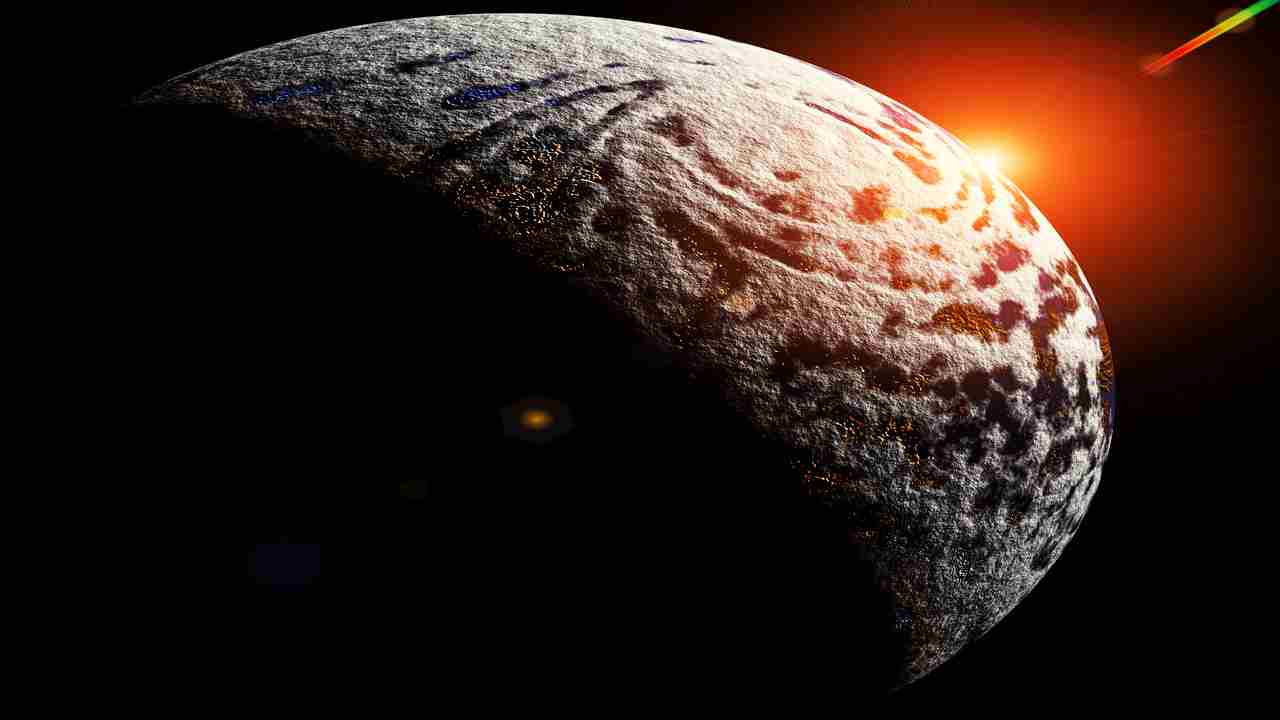
Mercury looks like a simple world at first glance—small, rocky, and covered in craters. But beneath that quiet appearance lies one of the most extreme environments in the solar system. Its temperature swings from scorching heat to freezing cold, making Mercury a planet of brutal contrasts unlike anywhere else.
Explore More Topics
Gamma-Ray Bursts: The Universe’s Most Violent Explosions
Gamma-ray bursts (GRBs) are brief, powerful flashes of high-energy radiation that outshine entire galaxies for a few seconds. They occur randomly across the sky, often billions of light-years away, yet the energy they release is so intense that Earth-based detectors can pick them up instantly. These events push astrophysics to its limits and provide a rare glimpse into the universe’s most extreme processes.
What Happens Inside a Black Hole? Exploring the Unknown Interior
Black holes are among the most mysterious objects in the universe. While scientists understand how black holes form and how they interact with their surroundings, what happens inside a black hole remains one of the greatest unsolved mysteries in physics. Crossing the event horizon—the point of no return—takes you into a realm where spacetime is warped beyond recognition and where our current theories break down.
The Darkest Objects in the Universe: How We Detect Invisible Black Holes
Black holes are famous for being invisible. They emit no light, no radiation, and no signals that can be directly detected with traditional telescopes. Yet scientists have discovered dozens of them and mapped their behavior across the cosmos. How is this possible?